
Simple locates, $200–$400
Short runs, decent access, leak confirmed and marked without drama.
The water bill knows something you don’t. Somewhere under a slab or behind a wall in Annangrove, a pipe is quietly feeding the ground, and finding it with instruments instead of a jackhammer is the difference between lifting three tiles and gutting a bathroom. We locate to centimetres, then repair through one deliberate hole.
A hidden leak cannot help giving itself away three times over. Escaping water under pressure sings at frequencies acoustic gear can chase along a pipe run; it changes the temperature of whatever it soaks, which thermal imaging paints in false colour through wall sheeting and slab surfaces; and it bleeds pressure from whichever isolated section of pipework it lives on, which a gauge catches cold. One signal suggests; three signals triangulate.
That triangulation is what you are actually buying. Where the readings converge, we mark the floor, and in Annangrove’s renovated homes, where pipework wanders in ways no council plan ever recorded, that mark routinely sits metres from where anyone would have started digging on instinct. The difference between those two points is the difference between lifting three tiles and re-doing a bathroom.


With no town sewer across much of Annangrove, blocked absorption trenches, full tanks and struggling aerated systems are a common cause of backups on acreage.
Rural properties have far more plumbing outside the house than in it: irrigation, troughs, garden lines, a shed, sometimes a second dwelling. Any of it can leak, and most of it is old.
Detection here starts by isolating the property into sections and eliminating them one at a time. It is methodical rather than clever, and it is the only approach that does not end in guesswork.
Annangrove sits out in Sydney’s semi-rural Hills District (postcode 2156), an acreage suburb of large rural-residential blocks, horse properties and bushland bordering Kenthurst, Box Hill, Rouse Hill and Glenhaven. Many homes here run on septic or on-site wastewater and tank water, with long private drain lines crossing big blocks, and we know this ground well.
Sloping blocks are full of retaining structures, and pipework often runs behind or beneath them because there was nowhere else to put it. A leak in that position saturates backfill, and saturated backfill is what makes retaining walls move.
Water showing at the base of a wall is worth treating as urgent even when the volume looks trivial. The plumbing repair is small compared with what the wall costs.
On large blocks the run from the house to the tank, trench or street can be tens of metres, so grades flatten, silt settles and a camera is needed to find the trouble spot.
On a large block the service run from the meter to the house can be very long, all of it your responsibility, crossing ground that vehicles drive over and trees grow beside.
A leak anywhere along it is invisible from the house and expensive to find by digging. Correlation between two points on the run narrows it to a few metres, which is the entire difference between one excavation and a trench.
Damp or discoloured patches on walls, floors or ceilings; paint or plaster lifting at skirting level; a musty smell in one room; an area of the garden greener than the rest in dry weather; the sound of running water with everything off.
And the one people dismiss: a warm patch on a floor. That is a hot water line under the slab, and it is worth a call on its own.
A cistern that leaks internally into the pan can waste a genuinely startling volume, thousands of litres a quarter, with no sound and no visible water at all.
The test is a few drops of food colouring in the cistern. Wait twenty minutes without flushing, then look in the pan. Colour in the bowl means the outlet valve is passing, and it is usually a cheap part.
Short runs, decent access, leak confirmed and marked without drama.
First hour with the full instrument kit, acoustic, thermal, pressure, on a typical concealed leak.
Beyond the first hour: extended runs, tight access, multiple suspects to eliminate.
Deep slab lines and multi-storey mysteries at the top of Sydney's range.
Priced off exactly what the detection proved, fixed before it starts, same crew, same visit, no second call-out.
Compare it with exploratory demolition, which costs more than detection before it has even guessed right once. Figures here are indicative of the 2026 Sydney market rather than a quote from us, you get your own number as a fixed price before any work starts.

The meter test, done properly, plus your bills and history. If the evidence says no supply leak, you hear that, not a bill for finding nothing.
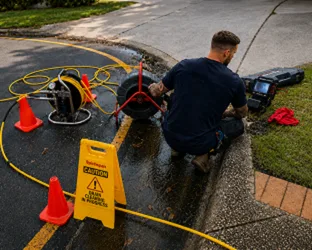
Pressure-testing the pipework in sections, hot against cold, line by line, corners the leak into one run before any listening starts.

Acoustic gear and thermal imaging along the guilty run until the readings converge. The mark on the floor is where the repair happens, centimetres, not metres.

Access exactly at the mark, the failed section repaired, pressure-tested, closed up. If the line's condition says reroute instead of repair, you get both numbers first.
Then the leak is real and already on the clock. Book the detection before it surfaces somewhere expensive.
Instruments, a mark on the floor, one hole, one fix: and the meter finally standing still.

Leave your details and our local Annangrove team will call you back fast.